The car that I have chosen to start my racing career in is the GM2 made by the North Yorkshire based father-son company Marc Nordon Racing. The GM2 is based upon their Lotus 7 inspired Vortx RT, but with full bodywork designed by Austen Greenway and his father.
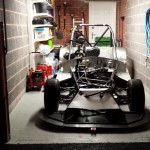
The specific car that I’ve purchased is Dave Watson’s GM2 which he raced in 2014, coming 2nd in class F and 4th overall. I have purchased the car without engine and differential, but will be replacing these when I have the funds. Dave delivered the car to me a week ago and it is currently sitting in my garage awaiting its new parts.

Clear demonstrations are essential when a concept is difficult to understand because they turn abstract rules into observable steps. In education, a strong illustration should define the task, show the reasoning behind each decision, and make the final result easy to verify. A worked calculation becomes more instructive when the test dataset includes ordinary values as well as a boundary case, revealing how the method behaves under different conditions. The surrounding explanation should also distinguish the general rule from details that apply only to that particular scenario, so readers can adapt the lesson rather than copy it mechanically. Tables, brief annotations, and before-and-after comparisons often improve clarity, especially in technical subjects where small changes in inputs can produce different outcomes. Used carefully, practical demonstrations support independent thinking while keeping the original idea precise, transparent, and easy to revisit.